




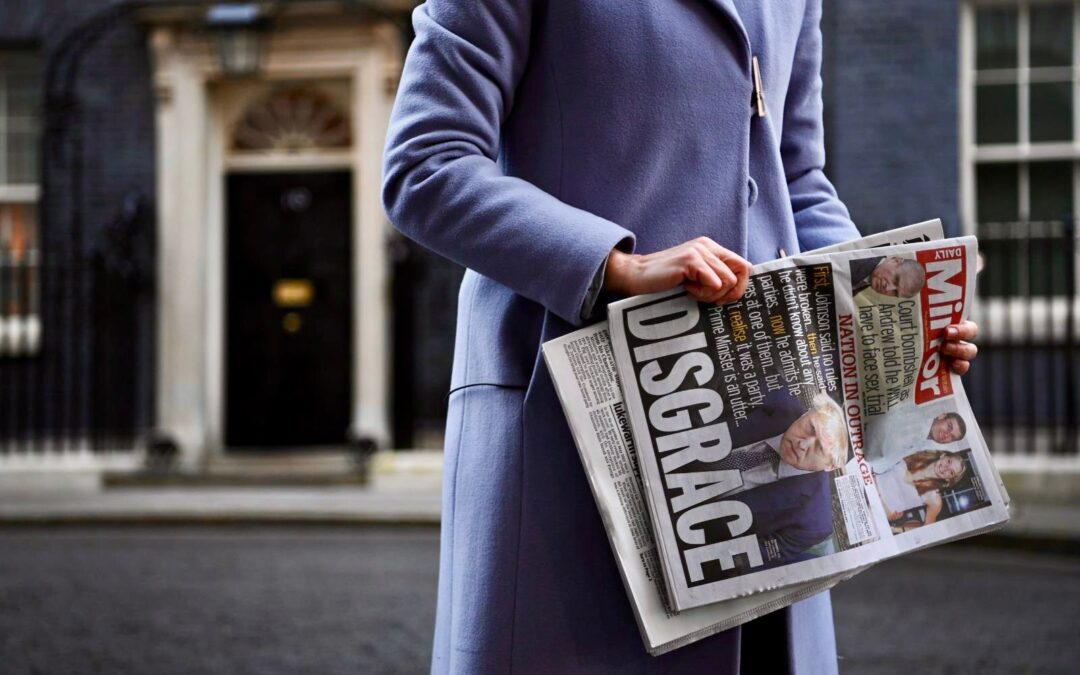
What does it mean to explain the UK to Spain? For decades, Spanish correspondents based in London have carried that responsibility – translating political drama, cultural quirks and economic shifts into stories that resonate back home. Whether through television, print or agencies, their reports have helped shape Spain’s understanding of modern Britain and its place in the world.
Starting the Journey – Why London?
Several of today’s longest-serving reporters arrived well before Brexit pushed the UK to the centre of headlines. Ainhoa Paredes of Telecinco has been based here since 2006, covering every prime minister from Tony Blair onwards. A year later, Celia Maza (La Razón / El Confidencial / Onda Cero) settled into what she describes as “a window onto international affairs” – where the UK–Spain relationship constantly overlaps with global Britain. In 2008, Eva Millán (Antena 3) took on the challenge of one of the world’s toughest media hubs – convinced that London was the rare place where politics, economics and culture could be covered in one beat.
The uncertainty of leaving the EU drew a new wave. Rafa de Miguel (El País) returned to frontline reporting in 2018, while Enrique Rubio (Agencia EFE) arrived in 2020 after postings in Washington, Cairo, Rabat and Paris. He stepped straight into covering Brexit negotiations, the pandemic and relentless political turnover in Downing Street. During the same period, Diego Arizpeleta (RTVE) began his first foreign post under lockdown conditions, and in 2023 Artur Zanón (Expansión) arrived to follow the financial flows connecting Spain and Britain.
Different backgrounds, but one shared conviction: London is more than a foreign assignment. It is where the story of two nations, deeply intertwined, can be told in real time.
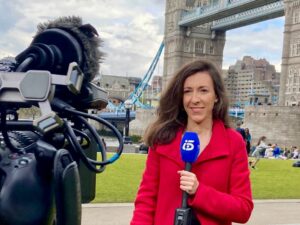
Ainhoa Paredes, Telecinco
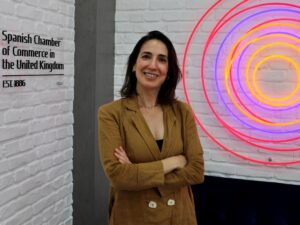
Celia Maza, La Razón · El Confidencial · Onda Cero
Bridging Two Worlds

Eva Millán, Antena 3
For Spaniards, Britain feels both familiar and foreign – close enough to recognise, yet different enough to need decoding. Correspondents step in not just to report facts, but to interpret traditions, institutions and public debates.
That role is especially visible on television. For Paredes, a live shot from Parliament or Trafalgar Square acts as soft diplomacy. Millán describes her job as “translating reality” – breaking down complex British customs into a few seconds on air. The Royal Family remains one of the most recognisable reference points, helping Spanish viewers grasp an otherwise unfamiliar system.
Each correspondent approaches Britain through a different lens. Maza highlights parallel debates between Spain and the UK – from lowering the voting age to new housing models – showing how the two societies can learn from each other. De Miguel insists on the need for context: with English-language news only a click away, his task is to connect stories of unrest, inequality or the rise of parties like Reform UK to wider social trends. For Zanón, the challenge is economic translation: explaining why Britain invests in nuclear power while Spain phases it out, or what City tax reforms mean for investors. His readers expect facts, but also implications.
Together, their work shows correspondents as cultural interpreters as much as reporters – building bridges that reveal how Spain and the UK mirror, and sometimes challenge, one another.
The Business Lens

Natasha Tinsley (left), Communications and Events Assistant at the Chamber, with Rafa de Miguel (right), El País
That interpretive role has direct implications for business. Reports from London not only flag risks such as Brexit or regulatory change, but also spotlight Spanish success abroad – stories that reinforce Marca España and deepen economic ties.
Many of the journalists highlight Spain’s imprint on British infrastructure, from Ferrovial’s work on the Elizabeth Line to Santander’s nationwide presence. Rubio underlines the value of companies sharing their achievements with the press, which strengthens Spain’s profile overseas. Arizpeleta notes how sudden political shifts in Westminster can sway investor confidence, while Paredes points out that television images – whether of protests or security alerts – shape perceptions of Britain for tourists and potential relocators. For Maza, the most decisive stories are often the everyday ones: housing shortages, childcare costs, immigration rules – all factors that directly inform corporate strategy.
Behind the Scenes: Life as a Correspondent

Enrique Rubio, Agencia EFE
But the role isn’t only about analysing economies or diplomacy. Behind every dispatch is the daily reality of the correspondent’s grind – phones that never switch off, deadlines that never wait. Paredes jokes she has spent so much time outside Downing Street that she could have pitched a tent. Rubio describes the constant battle for access, with foreign reporters often facing restricted opportunities. Yet the relentless pace comes with unique privilege: front-row seats to global summits and moments of historic change. As Millán reflects, Britain itself has shifted dramatically during her years in London – from the optimism of the 2012 Summer Olympics to the disillusionment of Brexit’s stalled promise.
Defining Moments
Certain events stand out as turning points in their coverage. For De Miguel, nothing matched Britain’s break with Europe – the “story of the decade” that dominated headlines and reshaped the lives of Spaniards in the UK. Millán singles out the death of Queen Elizabeth II, recalling it as the moment that echoed most profoundly across Spanish media. Arizpeleta describes the Boris Johnson years as a “media goldmine” – a sharp contrast to the calmer politics under Keir Starmer. And when Westminster falls quiet, correspondents turn to other stories – from culture to the City, and from Gibraltar to football, where Spanish names have become fixtures in the Premier League.
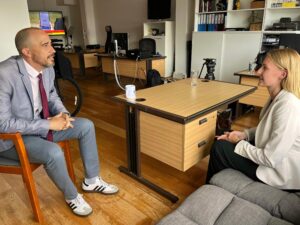
Diego Arizpeleta (left), RTVE, with Natasha Tinsley (right), Communications and Events Assistant at the Chamber

Artur Zanón, Expansión
UK–Spain Ties
The role of these journalists will remain essential: not only in explaining the UK to Spain, but in showing how two nations so close – and yet so different – continue to learn from one another. They are both analysts and storytellers, translating British realities into Spanish contexts while placing shared challenges and successes within a wider narrative of opportunity.
Blog post written by Natasha Tinsley
