
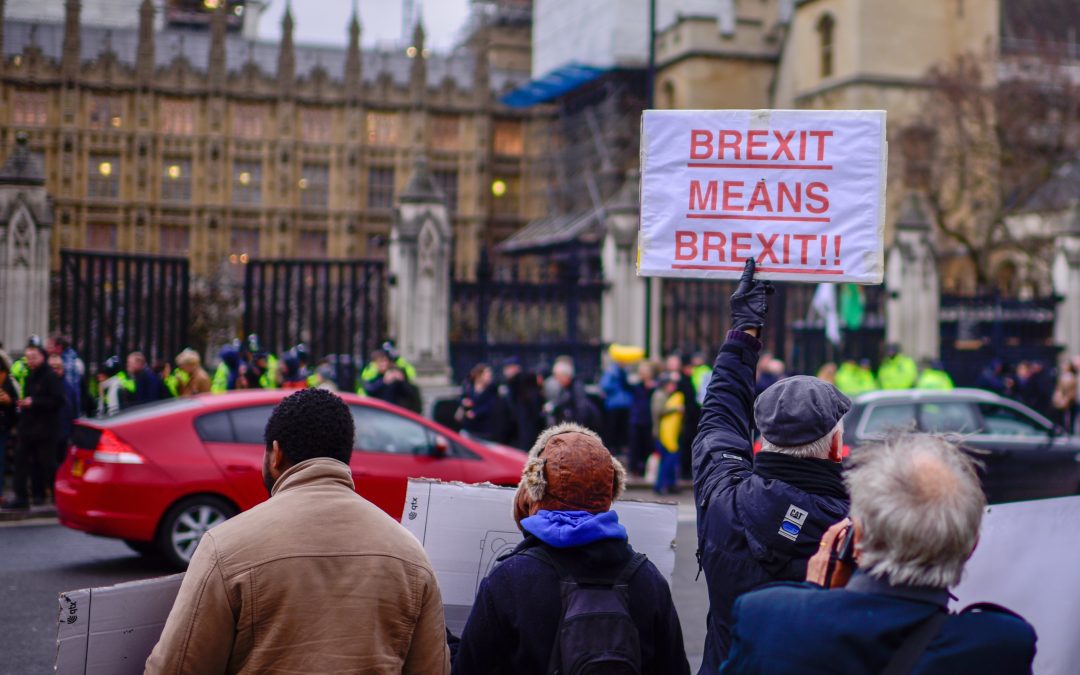
Public perception of Brexit has changed significantly since the 2016 referendum, but not always in straightforward ways. At the time, the debate was framed in broad political terms: taking back control, restoring sovereignty, reducing immigration, freeing the UK from EU regulations and allowing the country to strike its own trade deals. For many voters, Brexit represented an opportunity to reshape the UK’s political and economic future. For others, it was a risky break from the country’s closest trading partner and a potential threat to stability. But shifting public opinion is only one side of the story. Beyond what people think about Brexit today lies a more tangible set of changes—how the UK now functions outside the EU framework. From mobility to trade and culture, the real-world consequences of that 2016 decision are explored in life.
Ten years on, those initial narratives have given way to a more complex and divided public mood. Perceptions of the referendum itself have shifted notably. In 2016, around 66% of the public agreed that then Prime Minister David Cameron was right to call a referendum. Today, that figure has fallen to 43%, while the share who believe it was the wrong decision has risen from 24% to 38%. The country remains split, but there is now a clearer sense that more people question the decision to hold the vote than at the time.
This shift has not been evenly distributed across society. Age remains one of the strongest dividing lines. Younger people, who were already more likely to support Remain in 2016, continue to associate Brexit with reduced mobility and opportunity. The end of freedom of movement has had a lasting impact on their expectations around work, study and travel. For many, Brexit is experienced less as a constitutional change and more as a practical limitation on access to Europe. By contrast, those aged 55 and over are now the only age group still more likely to say David Cameron was right (51%) rather than wrong (34%) to hold the referendum.
Political affiliation also continues to shape attitudes but in more nuanced ways than before. Across all major parties, voters are now more likely than in 2016 to say the referendum was the wrong decision. Even among Reform UK voters, 19% now take this view, compared with just 4% of UKIP voters in 2016. This suggests that even within strongly pro-Brexit constituencies, opinion has softened or become more pragmatic over time.
Regional and socio-economic factors are also important. In many “Red Wall” areas, where support for Leave was once strongest and where political loyalties have since shifted, Brexit now sits alongside concerns about immigration, living standards and party preference, particularly between Labour and Reform UK. Rather than a single defining identity, Brexit has become one issue among several shaping political behaviour.
A key question is what explains the continued support among many Leave voters. For those who remain satisfied with Brexit, the focus is less on immediate economic outcomes and more on political principles. Regaining control over immigration policy, trade agreements and domestic regulation is often seen as a long-term achievement, even if short-term disruption has been significant. For these voters, Brexit is still judged as a question of sovereignty rather than efficiency.
As Professor Bobby Duffy of King’s College London notes, while more people now say it was wrong to hold the referendum and more believe Brexit is going worse than expected, “on both counts, those views still haven’t reached a majority.” He adds that opinion has shifted “glacially slowly,” with no clear majority yet in favour of reversing course or holding another referendum.
At the same time, there is growing recognition that closer UK–EU cooperation may be desirable in certain areas, particularly trade, security and defence. However, as Professor Anand Menon of UK in a Changing Europe observes, “there is no easy option when it comes to the EU relationship. Each carries clear trade-offs, particularly between regulatory freedom and ease of EU trade.”
Overall, public perception has moved away from ideological positions toward a more pragmatic assessment of outcomes. There is limited appetite to reopen the referendum debate, but increasing interest in reducing friction where possible. Ten years on, Brexit is less a question of identity and more a question of management: how the UK adapts to, and operates within, the reality it created in 2016.
As this series continues, we will explore these shifts in greater depth, examining how Brexit has affected businesses, the economy, trade policy and the UK’s evolving relationship with the European Union. Follow along as we move from public opinion to practical consequence and consider what the next decade of Brexit may look like.