
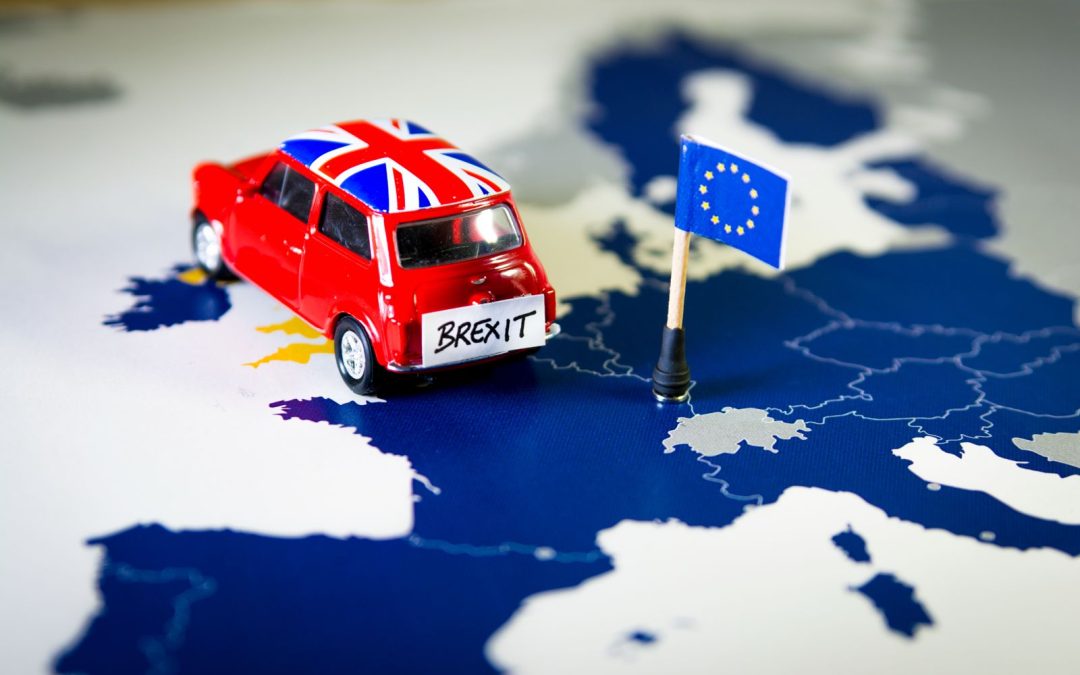
UK–EU trade remains central to the British economy, but it now operates within a more complex framework of costs and constraints. These practical realities form part of a wider reconfiguration of the UK–EU relationship, explored across this series. If Brexit marked the formal end of the United Kingdom’s membership of the European Union, it did not mark the end of the relationship itself. Instead, it reshaped it into something more complex: less integrated, more conditional and increasingly defined by practical adjustments rather than shared systems. Ten years on from the referendum, the UK–EU relationship is no longer about membership or reversal but about how two closely connected economies and societies continue to interact outside a single framework.
One of the most immediate and personal consequences has been felt by British citizens living in Europe. Before Brexit, freedom of movement made it straightforward for UK nationals to live, work and retire across EU member states. That ease has now been replaced by a patchwork of national visa rules, residency requirements and administrative processes. For those working in Europe, particularly in sectors such as education, hospitality and professional services, the ability to move fluidly between countries has been significantly reduced. What was once a single labour market has become a series of separate national systems.
The impact is also visible among retirees, particularly in traditional destinations such as Spain and Greece. While many existing residents were protected under withdrawal arrangements, new retirees face more complex residency and healthcare rules than in the pre-Brexit era. Decisions that were once driven primarily by lifestyle and affordability now require greater consideration of legal status, visa duration and long-term access to public services. For some, this has not changed the decision to move but it has changed the ease with which it can be done.
Beyond individual mobility, one of the most striking and widely acknowledged impacts has been on the cultural and creative industries. The music sector in particular has faced significant disruption. Touring across Europe, once a seamless extension of UK-based activity, now involves additional costs, paperwork and logistical barriers. Hauliers transporting equipment must navigate customs declarations, time-limited visas for crew members, and varying regulations across different countries. For large-scale acts, these challenges are manageable. For emerging artists and smaller tours, they can be prohibitive.
As a result, Brexit has had a disproportionate impact on cultural exchange and the development of new talent. Tours that once relied on tight margins and frictionless movement are now more expensive and complex to organise. This has reshaped the live music ecosystem, particularly for grassroots and mid-level artists seeking to build audiences across Europe.
At the same time, the UK–EU relationship has not stood still. Cooperation continues in areas such as trade in goods, security, research and regulatory coordination, albeit within a more formal and less integrated structure than before. The Trade and Cooperation Agreement provides a baseline framework, but it is widely recognised as more limited than the deep integration that existed under membership of the Single Market and Customs Union. The relationship now operates through negotiation, adjustment and periodic political engagement rather than automatic alignment.
This new structure reflects a broader reality: Brexit has not ended interdependence between the UK and the EU, but it has changed its nature. Where integration once reduced friction by design, the current relationship manages friction by necessity. Businesses, individuals and institutions have adapted, but not without cost or complexity.
Ultimately, the UK–EU relationship after Brexit is defined not by a single settlement, but by ongoing adjustment. It is a relationship shaped less by grand political decisions and more by accumulated practical realities—how people travel, how businesses operate, and how culture is shared across borders.
Taken together, this series has shown that Brexit is no longer best understood as a single historical moment, but as a continuing process with uneven consequences. Public opinion has shifted but not settled. Businesses have adapted but not fully absorbed the costs. Individuals have adjusted but not recovered lost freedoms in the same form. The UK–EU relationship continues to evolve within constraints set a decade ago.
As we mark ten years since the referendum, the question is no longer simply what Brexit meant but what kind of relationship the UK wants to build with Europe going forward. Understanding that balance between sovereignty, opportunity and connection remains one of the defining challenges of the next decade.