




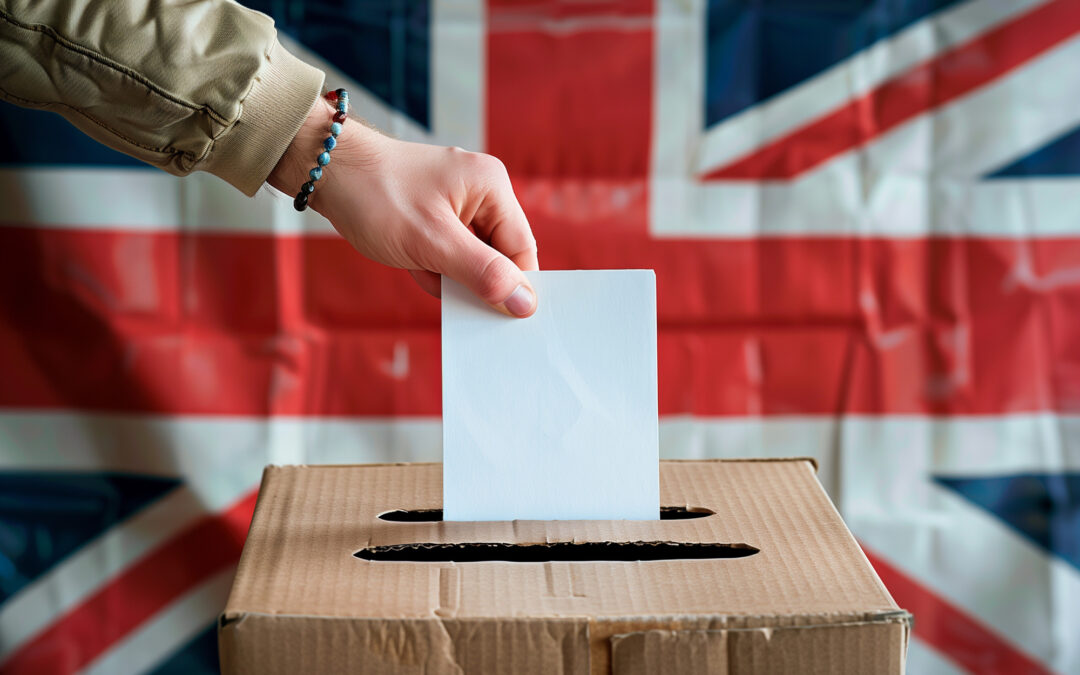
The local elections across councils in England, as well as the Scottish Parliament and Senedd (Welsh Parliament), on 7th May 2026 represent a pivotal moment for the UK Labour Government. These elections are widely viewed as a referendum on Prime Minister Sir Keir Starmer MP’s leadership. This follows a difficult period for the Prime Minister, marked by challenging parliamentary by-election losses in Gorton and Denton (February 2026) and Runcorn and Helsby (May 2025), alongside low polling numbers.
Where are there local elections in England?
Voters will head to the polls for 96 councils across England, all 32 London Boroughs, and two new unitary authorities in Surrey – a key part of the government’s ongoing devolution agenda. Simultaneously, the devolved nations will decide the future of their respective parliaments in Edinburgh and Cardiff.
Initially, the government cancelled elections for 30 councils across England’s districts and counties, as elections for new authorities are taking place in 2027. However, following Reform UK’s legal challenge to the cancellation of elections, the government was forced into an embarrassing U-turn. This means many more councillors are now up for re-election, likely exacerbating Labour’s losses.
The political outlook
Labour
Labour is expected to struggle in these elections. This includes areas in which they are currently strong, such as London, Birmingham, and Cambridge, which will be particularly damaging for the party. Labour is in a tough position – it finds itself squeezed by insurgent parties on both flanks: Reform UK on the right and the Green Party on the left. While the Government has attempted to pivot toward the right on issues like immigration to retain voters, this tactic may alienate its urban, left-leaning base. The Green Party’s victory in the Gorton and Denton parliamentary by-election in February and polling showing significant losses to the Green Party solidifies its threat to Labour. A poor showing in May could lead to intense internal pressure on Sir Keir Starmer MP, potentially calling his leadership into question.
Conservative
It is also expected to be a difficult night for the Conservatives. The party has not regained momentum since the last General Election and has failed to prevent Reform UK being viewed as the primary alternative on the right. It suffered greatly in the county council elections in May 2025 and this will likely be replicated this year. Whilst headlines will likely focus on Labour’s poor results, Kemi Badenoch MP, Leader of the Opposition, will also come under more pressure if the Conservatives suffer heavy losses locally.
Reform UK
Reform UK is likely to be the big winner on election night. It has been top of the national polls almost since Labour took office in July 2024, and performed strongly in May 2025. It took control of 10 councils and won two mayoralties in England, which is extremely impressive for a new political party. It will look to capitalise on its electoral momentum to continue to solidify its status as the dominant force on the right.
Green Party
The Greens have capitalised on dissatisfaction among younger, urban, and left-leaning voters under Zack Polanski’s leadership since September 2025. Buoyed by a great victory in the Gorton and Denton parliamentary by-election, the party will aim to make deep inroads into safe Labour council seats. The Greens will benefit from an electorate increasingly willing to use local elections as a protest vote against the incumbent government.
Liberal Democrats
The Liberal Democrats, the UK’s centrist party, also has a strong record in local elections. The party has been extremely effective over the last few years at mobilising local support and its MPs are very involved at a local level. It will look to consolidate its support in councils it currently controls, and win votes in others by capitalising on Labour and the Conservatives’ unpopularity in the Southwest of London, Surrey, and further to the Southwest of England.
Implications
The results of these local elections will have implications at a national level:
- Personnel shifts: If Sir Keir Starmer MP resigns, there will be a new Prime Minister who will appoint their own cabinet and government ministers, resulting in almost an entire reshuffle.
- Policy recalibration: A new government with new priorities and voters to win back may shift its stance on several key issues, including planning, energy, tax, and immigration.
- Regulatory uncertainty: Any change in leadership mid-term brings a period of uncertainty and transition for implementing policy. This makes for a more complex and less predictable political landscape, which businesses will need to monitor closely.
In these turbulent political times, strategic guidance is vital. Crestview Strategy ensures your business maintains the right presence with the right stakeholders to ensure your priorities are heard and protected.
Blog post written by Chamber Member Crestview Strategy.
